December 16 2021
In December 2019 the World Health
Organization (WHO) was awakened to a COVID-19 infectious outbreak that
took place in the Hubei Province of China. Overnight, the healthcare
system all over the world was facing a big challenge on accommodating
and giving care to the rapidly increasing patient load in hospitals. In
the beginning, the management for COVID-19 was mainly supportive
treatment while the researchers and clinicians diligently continue to
investigate and implement a variety of therapies alongside creating
vaccine to combat this pandemic. Joining the bandwagon is also the usage
of plasma from the convalescent donors to treat patients with severe
COVID-19 infections. This therapy is called convalescent plasma (CP)
therapy.
This
interesting method of treatment is not foreign in the medical
fraternity as the blood products from the recovered patients have been
used since the late 1800s. Convalescent plasma therapy is mostly a
choice of treatment for infectious diseases that generally lacks vaccine
and therapy with a highly infectious nature of virus and high case of
fatality rate. This therapy was used during emerging infectious diseases
like the West African Ebola outbreak, West Nile Virus, MERS-CoV,
SARS-CoV-1, and H1N1.
Before
diving in-depth into the CP therapy topic, let us be familiarized with
the terms being used. Convalescent means that a person is recovering
after an illness or medical treatment. Plasma is a light amber liquid
component of blood that is freed from blood cells but holds proteins and
other constituents of whole blood in suspension. Plasma makes up about
55% of blood’s total volume. Hence, CP therapy in COVID-19 simply means
using plasma from patients who have recovered from COVID-19 and
transfusing it to the newly exposed patients to confer temporary
immunity and may this help in reducing the viral load. The goal of
antibodies in this treatment is to kill the virus and prevent additional
replication as well as disease-related tissue damage.
People
who have been clinically recovered from COVID-19 infection and tested
negative for SARS-CoV-2 by polymerase chain reaction (PCR) technique are
considered donors for CP. Patients with COVID-19 can be divided into
two groups: symptomatic and asymptomatic. For symptomatic patients,
clinical recovery is defined as the absence of fever for at least 24
hours and improvement in respiratory symptoms such as cough and
shortness of breath for at least 10 days. The clinical recovery time for
asymptomatic individuals is 10 days following the initial positive
oropharyngeal swab or nasopharyngeal swab. Physicians will choose
potential CP donors who are clinically asymptomatic at least one week
after discharge, and these donors will be tested for COVID-19
immunoglobin (Ig) G antibody as well as other screening tests that are
required, such as HIV, Hepatitis B, Hepatitis C, and syphilis screening,
full blood count, liver function test, and SARS-CoV-2 antibody test.
Before
CP donation, pre-donation counseling will be conducted to all donors.
The potential donors are counseled about the donation process and
possible donor adverse reactions. During counseling, review of
SARS-CoV-2 PCR and antibody results are also made.
The
CP donation can be made via whole donation and apheresis. However,
apheresis donation is recommended as it can obtain a higher volume of
plasma collection around 400- 500 mL. Following collection, the donated
plasma components will be labeled as CP and kept frozen at or below
-25°C while waiting for the transfusion microbiology results. The CP
unit will be stored at the blood centers in a separate designated blood
bank freezer up to 24 months. Once the request for the CP plasma is
received, the appropriate ABO blood group matched CP unit for
transfusion will be selected. Convalescent plasma that is transported as
liquid plasma will have the temperature maintained between 2-6°C and it
can be stored up to 40 days, while CP that is transported in frozen
state (– 25°C) can be stored up to 24 months.
The
selection of CP recipient is also done meticulously by the attending
physician. Written consent for CP treatment is obtained from the donor
before its administration. Current indications for CP treatment include
laboratory-confirmed COVID-19 infection with severe or critical illness
who are admitted to Intensive Care Unit and on ventilation, patients
with myocarditis or myocardial dysfunction due to SARS-CoV-2 infection,
and patients with hemophagocytic lymph histiocytosis (HLH) secondary to
SARS-CoV-2 infection. The CP treatment is also considered in COVID-19
patients who are predicted for progression to severe illness. This
treatment is contraindicated in patients with a history of severe or
life-threatening allergic reactions to blood or plasma products and
patients with underlying Ig A deficiency. The recommended standard dose
of CP treatment for an adult is approximately 200-250 mL as a single
dose over 1-2 hours transfusion while 4-5 mL/kg as a single dose over
1-2 hours transfusion for children. The most common risks linked with CP
therapy include febrile non-hemolytic reaction, allergic reaction,
transfusion-associated circulatory overload (TACO), and
transfusion-related acute lung damage (TRALI), which are all common with
standard plasma transfusion.
Previous
clinical trials of CP treatment had been shown to relieve clinical
symptoms in moderate to severe COVID-19 patients especially if the CP
had a high-titer of viral neutralization antibody and high levels of
antibody Fc-mediated function. However, recent evidence has shown that
CP treatment does not improve risk of intubation or death at 30-day.
Furthermore, CP treatment is also not recommended in non-severe COVID-19
patients. Thus, additional studies are needed to assess the
effectiveness of CP therapy among different types of patients’
populations as well as its optimal dose.
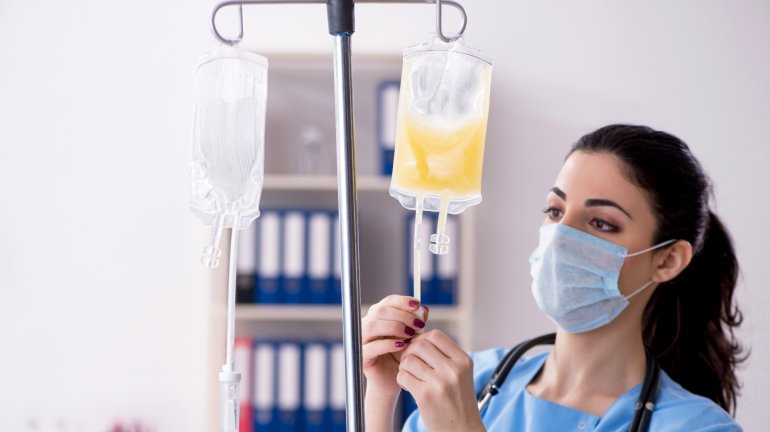
Figure 1: A unit of frozen convalescent plasma

Penulis Artikel
Nama penulis:
Dr Seethala Devi a/p Marathamuthu, Dr Sharmila a/p Manian dan Dr Siti Salmah binti Noordin
Afiliasi:
Kluster Perubatan Regeneratif
Bidang kepakaran:
Transfusi Perubatan.