
Fenomena #Bracesmurah: Sekadar Trend Kecantikan Atau Risikokan Senyuman Sepanjang Hayat?
Sep 29, 2026

December 4 2025
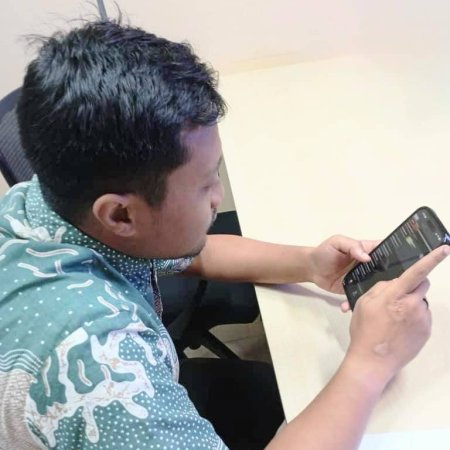
Imagine a world without Facebook, Instagram, WhatsApp, or TikTok. Just 20 years ago, that was everyday life. If you wanted to talk to someone, you picked up the phone, wrote a letter, or met in person. News came from the newspaper or radio. Today, social media is at the center of how we share ideas, express emotions, and stay connected. A single tweet can spark a movement, a TikTok trend can spread across the globe in days, and WhatsApp has replaced the handwritten letter. Social media hasn’t just made communication faster—it has transformed how humans interact altogether.
The Digital New Conversation: Digital Communications vs. Surface Relations
In the past, communication was slow and one-sided. Letters took weeks, while TV, newspapers, and radio delivered information with no way for the audience to respond. It was a “top-down” system—speakers spoke, and listeners listened. Social media flipped that model. Now, anyone with internet access can share content, react, and respond instantly. A teenager in Malaysia can go viral on TikTok overnight, while a small business in Nigeria can advertise to customers in Europe. Scholars call this a shift from monologue to dialogue. Instead of one-way broadcasts, social media creates ongoing conversations with instant feedback (Global Media Journal, 2023). Of course, more voices also mean more noise, making it harder to separate facts from fiction.
There’s no doubt that social media keeps us connected. Families across continents share photos instantly, and old school friends stay in touch through Facebook groups. Research even suggests that online connections can strengthen offline friendships. A 2024 study in Computers in Human Behavior found that people who use social media often spend more time with friends face-to-face. But not all connections are deep. Clicking “like” is not the same as a meaningful conversation. Critics warn that these “micro-interactions” spread attention too thin across hundreds of acquaintances. Another trend is parasocial relationships—one-sided bonds with influencers or celebrities. These may feel intimate but lack real reciprocity, raising questions about what “connection” truly means today.
One of the clearest changes is the way we use language online. Tweets are short, TikTok captions are simple, and Instagram relies heavily on visuals. Emojis act like emotional punctuation, while GIFs and memes let people “speak” in moving images. Hashtags turn single posts into global conversations. Gen Z, especially, has transformed slang and expression online. Platforms like TikTok are “language laboratories,” where terms like idk (“I don’t know”) or slay (to do something with confidence) spread across cultures within days (Anderson & Jiang, 2022). Linguist Gretchen McCulloch (2020) notes that these are not mistakes but adaptations—just as spoken language differs from written language, digital language adds a new layer of expression.
Social Media and Well-Being in the Age of Fake News Going Viral
On face-to-face conversation, we rely on tone, eye contact, and body language. Online, those cues vanish, often leading to misunderstandings. To adapt, people use emojis, GIFs, or even carefully chosen punctuation to show tone. Research shows that emojis help fill the gap, acting as emotional substitutes when tone is missing (Bai et al., 2019). Social media makes it easier to meet new people, but it also forces us to work harder to interpret meaning behind their words.
One major challenge of online communication is misinformation. Rumours spread faster than corrections, and algorithms reward what is catchy, not necessarily true. A recent study argued that social platforms distort “truth incentives,” pushing people to prioritize speed and virality over accuracy (Gao et al., 2025). While social media gives underrepresented voices a chance to be heard, it also creates fertile ground for falsehoods and propaganda.
Communication isn’t just about information—it’s tied to emotions. On the positive side, social media connects people with support groups, shared struggles, and communities. A systematic review in Archives of Public Health (2023) found that users who engage socially online often report higher well-being. But problems arise when usage turns passive. Scrolling through Instagram “perfect lives” can lead to insecurity, stress, and even depression. The key, researchers suggest, lies in how we use social media—actively to connect, or passively to consume.
When Communication Becomes Mobilization
Beyond personal use, social media has transformed collective communication. From the Arab Spring to #MeToo and climate strikes, platforms have been vital for activism. This is called networked activism—mobilization driven not just by facts, but by shared emotions amplified online (Hsiao & Yang, 2022). While these tools empower social change, they can also be misused by extremist groups or propaganda networks. Social media has undeniably reshaped communication. It allows us to connect instantly, create communities, and even drive global movements. At the same time, it introduces new challenges like shallow connections, misinformation, and emotional strain. Like any tool, its value depends on how we use it. When approached mindfully, social media can be more than a distraction—it can be a bridge, bringing people together, shaping culture, and even inspiring change across the world.
References: