Sambutan Hari Warga Emas Sedunia 2026 Perkukuh Kesedaran Penuaan Sihat
Oct 03, 2026
MPG2, October 17 2025
World Anatomy Day is celebrated annually on October 15th to honour the discipline of anatomy and raise awareness of its vital role in biomedical sciences, medical training, and public engagement. Each year, the International Federation of Associations of Anatomists (IFAA) announces a theme. For 2025, the theme — “Global Perspectives of Anatomy: Bringing Together the Global Community and Recognising Differences While Celebrating Similarities” — highlights how anatomical education and research vary across regions, yet share many common foundations.
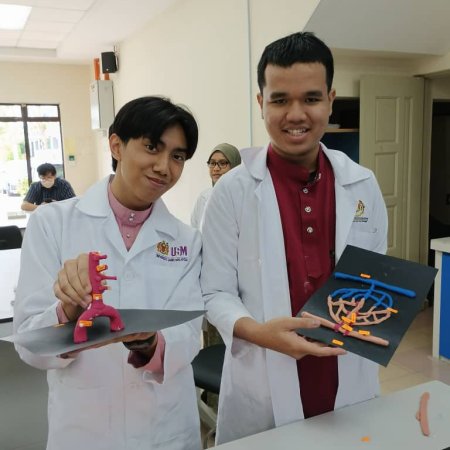
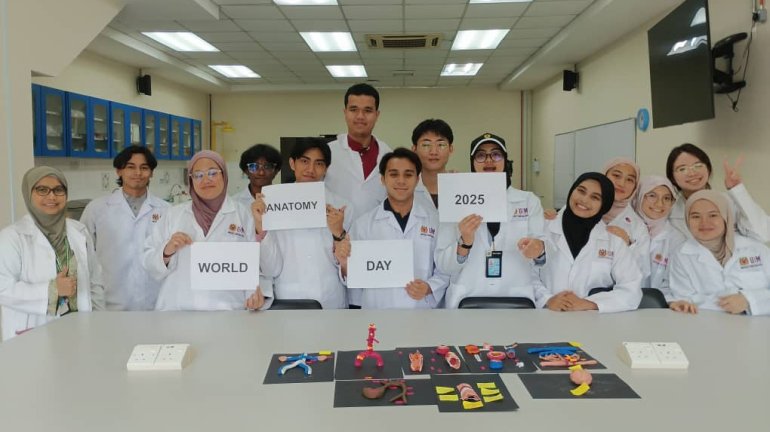
In conjunction with World Anatomy Day, a group of 13 enthusiastic Year 2 medical students from IPPT, Universiti Sains Malaysia (USM), brought creativity into learning by constructing human cardiovascular system (CVS) organs using plasticine. The hands-on activity, conducted at the end of a practical session and led by Dr Husnaida Abdul Manan@Sulong, aimed to deepen students’ understanding of the heart’s structure and the interconnections among major blood vessels and circulatory pathways — not just through textbooks, but through tactile, visual, and collaborative exploration.
The multicultural group—including Malay, Chinese, and Indian Malaysian students—worked in small teams to model the heart, valves, aorta, pulmonary vessels, arteries, veins, and microcirculation structures using coloured plasticine. Each group presented their models, explaining gross and histological structures, oxygenation processes, and anatomical relationships with surrounding organs.
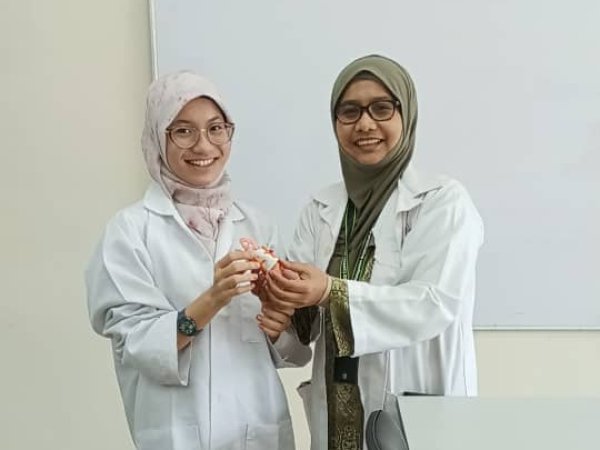
To make the session more engaging, students competed in both individual and group categories, showcasing their anatomical accuracy, creativity, and presentation skills. At the end of the event, three individual winners and three group winners were announced and recognised for their outstanding efforts. Among the winners was Damia, whose detailed model of fenestrated capillary impressed the judges for its precision and creativity.
Special thanks were also extended to MLT staff members Puan Faizah and Encik Foo, who participated as judges and helped make the event a success.
Beyond academic learning, the session fostered teamwork, problem-solving, and creative thinking — key soft skills for future doctors. Students also reflected on the clinical relevance of CVS anatomy, discussing conditions such as atheroma and atherosclerosis and linking their models to real-life diseases such as myocardial infarction and stroke.
Adam, one of the participating medical students, shared his thoughts:
“The event was great and made the anatomy practical session more interactive. We were able to express our creativity by building our own anatomy models. I’m looking forward to more engaging and hands-on activities like this in the future.”
This initiative exemplifies USM’s commitment to innovative and inclusive anatomy education, blending creativity with scientific rigour. By merging art and medicine within a diverse learning community, students not only learn anatomy — they also come to appreciate the beauty, complexity, and universality of the human body.
This initiative also supports the United Nations Sustainable Development Goals (SDG 4: Quality Education and SDG 3: Good Health and Well-being) by promoting inclusive, hands-on medical learning that enhances both knowledge and compassion in future healthcare professionals.